

Universe is everything!

 Last Moon Landing
years- :
Months- :
days
hours- :
minutes- :
seconds

New Simulation Explains how SMBHs Grew so Quickly
One of the key scientific goals of next-generation observatories (like the JWST) has been to observe the first galaxies in the Cosmos – those that existed at Cosmic Dawn. This epoch is when the first stars, galaxies, and black holes
Read Full ArticleScientists simply can’t agree on how fast the universe is expanding
It’s one of the leading puzzles in cosmology. Why two different approaches used to calculate the rate at which the cosmos is expanding don’t produce the same result. Branded as the Hubble tension, the conundrum suggests that there could be
Read Full ArticleMore Milky Way-like galaxies have been spotted by scientists in early cosmos, advancing our understanding of how galaxies came into being
Mizzou researchers are peering into the past and revealing new clues about the early cosmos. Since light takes a very long time to travel through space, they have the opportunity to see how galaxies looked billions of years ago.In a
Read Full ArticleA Brand New Way to Search for the First Stars in the Cosmos
Observing the earliest stars is among the holy Grails of astronomy. Now, a University of Hong Kongteam led by astrophysicist Jane Lixin Dai is proposing a new technique for detecting them. If it succeeds, the approach has the potential to
Read Full Article‘We’re trying to find the shape of space’: astrophysicists wonder if the cosmos is like a doughnut
Rather than stretching to infinity and beyond, the universe may have a topology that can eventually be mapped We may be existing in a doughnut. It may sound like Homer Simpson’s fever dream, but that could in fact be the
Read Full ArticlePrimordial Black Holes Can Explain Merely a Fraction of Dark Matter
What is Dark Matter? That question is a regularfixture in discussions about the nature of the Cosmos. There are several proposed explanations for dark matter, both within the Standard Model and exterior to it.One proposed constituent of dark matter is
Read Full ArticleNew model to explain the current accelerated expansion of the cosmos
A new model to explain the present accelerated expansion of the universe has been proposed. Contrasting existing models, this model does not need any form of dark energy or modified gravity approaches. Nonetheless, there is a price to pay: we
Read Full ArticleIs the “Methuselah star” actually older than the Cosmos?
For as long as humans have envisioned the Universe, we’ve gaped at the vastness of it all. Was our Cosmos infinite? Was it eternal? Or did it come into being a finite amount of time ago? Over the 20th and
Read Full ArticleThe shape of the universe could be far more complex than anybody had ever imagined
About 2,500 years ago humanity began to recognize that our planet earth is round—though a few “flat Earth” supporters still refute this today. The shape of our cosmos is not clear, however. Previous studies have proposed that the universe probably
Read Full ArticleBlack Holes: Why research about them? What makes them so intriguing?
“Gravity is the oldest known, but the least understood force in nature,” Dr. Gaurav Khanna (Professor in the Department of Physics at the University of Rhode Island)told Universe Today. “For students of gravity, black holes are amongst the most interesting
Read Full ArticleWe've recently added
Space Junk: The Growing Problem of Waste in Orbit
How to Work at a Space Agency Like NASA or ESA When You Grow Up
3 Ways to Build Curiosity About Space in Your Kids at Home
New model to explain the current accelerated expansion of the cosmos
There might be a ‘dark mirror’ universe within ours where atoms failed to form, new study proposes
Black Holes: The Universe’s Secret Hideouts
How Mathematics Is Used for Space Exploration?
JWST may have found the oldest black hole in the universe

Galaxies
You have probably heard the word galaxy or galaxies mentioned by loads of people who know a lot about them, or by your own parents or your science teacher. Let
Read Full Article
Gravity
Do you know what gravity is? Firstly gravity is so very important to the universe and how the universe works. It’s also very important to our planet, and how it
Read Full Article
Robot Explorers
One of the main reasons how we have managed to travel into space and why we know what we know about the universe is by creating the technology to send
Read Full Article
Space Junk: The Growing Problem of Waste in Orbit

https://www.pexels.com/photo/trash-near-door-1549528/
The vast expanse of space might seem endless, but it quickly becomes cluttered…
Read Full Article
How to Work at a Space Agency Like NASA or ESA When You Grow Up
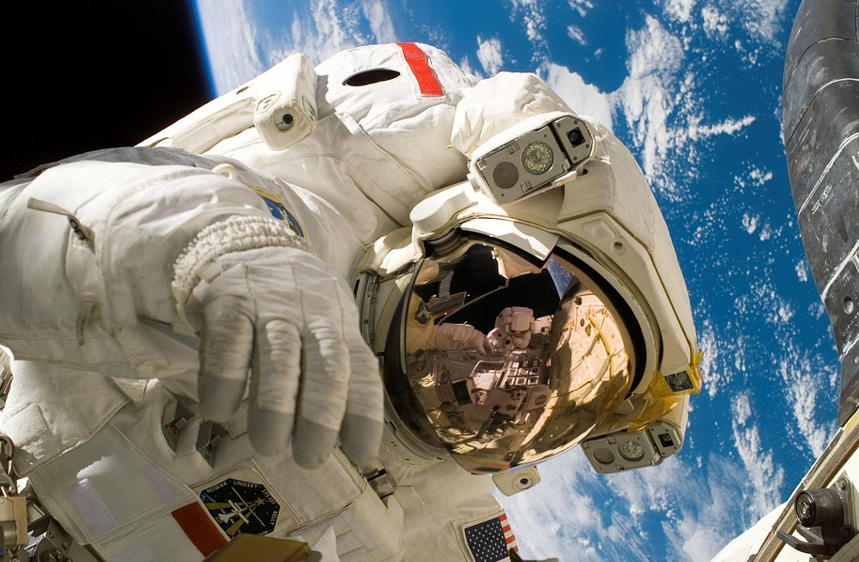
MT: Working at a Space Agency — Key Tips to Follow
MD: Working at a space agency can be…
Read Full Article