

Universe is everything!

 Last Moon Landing
years- :
Months- :
days
hours- :
minutes- :
seconds

The Higgs particle could have finished up the cosmos by now—here’s why we’re still here
Although our universe may appear stable, having existed for 13.7 billion years, quite a few experiments suggest that it is at risk—walking on the edge of a very perilous cliff. And it's all down to the instability of a single
Read Full ArticleSome mind-blowing discoveries about the cosmos since Kepler’s launch
Significant advancements have been made in space exploration since the launch of the Kepler telescope way back in 2009. Kepler's primary assignment is to search for habitable planets beyond our solar system, and its extraordinary competences allow it to identify
Read Full ArticleWe Might Bump Into Life Just Under the Surface on Europa
What is needed to have life at another world? Astrobiologists inform you need warmth, water, and something for life to consume. If life is there, it’ll leave signs of itself in the form of organic molecules named amino acids. Now,
Read Full ArticleA new discovery sheds light on the geneses of matter in the early universe
The early cosmos was 250,000 times hotter than the core of our sun. That's far too hot to form the neutrons and protons that make up everyday matter. Researchers recreate the conditions of the early cosmos in particle accelerators by
Read Full ArticleWhy an Infrared observatory is key to seeing the first stars?
Why is a potent infrared observatory crucial for seeing the first stars and galaxies that formed in the cosmos? Why on earth do we even want to see the first stars and galaxies that formed? One simple reason is... we
Read Full ArticleRoman Space Telescope of NASA Will Illuminate Cosmic Dawn
Today, vast stretches of space are crystal clear, but that wasn’t the case always. During its early stages (infancy), the cosmos was filled with a “fog” that made it opaque, cloaking the first galaxies and stars. NASA’s forthcoming Nancy Grace
Read Full ArticleTechnically, We Shouldn’t Be—But ‘Cosmic Ghosts’ Deep Underground Could Divulge Why We’re Here
The DUNE neutrino detector will try to ascertain why matter overwhelmed antimatter in the early cosmos. One of the greatest basic mysteries of the universe is why it’s occupied with anything at all. That’s because the Big Bang, the incident
Read Full ArticleIs the James Webb Space Telescope (JWST)capable of seeing galaxies over the universe’s horizon?
Since it started sending data back to Earth in 2022, JWST has significantly impacted astronomy, and one of its most revolutionary accomplishments is the observation of some of the most distant galaxies ever seen. But, because light doesn't travel instantly
Read Full ArticleWarp Drives Could Push Gravitational Waves Through The Cosmos
Will future humans employ warp drives to explore the universe? We're in no position to jettison the possibility. But if our distant progenies ever do, it definitely won't involve dilithium crystals, and Scottish twangs will have evaporated into history by
Read Full ArticleThe unexpected behavior of pulsing stars could help us measure the universe
Studying pulsing Cepheid stars provides a cosmic yardstick to measure the cosmos. New research offers the most accurate measurements yet of pulsating Cepheid stars, which may hold inklings about the enormous size and scale of our universe.Cepheids are a sort
Read Full ArticleWe've recently added
Space Junk: The Growing Problem of Waste in Orbit
How to Work at a Space Agency Like NASA or ESA When You Grow Up
3 Ways to Build Curiosity About Space in Your Kids at Home
New model to explain the current accelerated expansion of the cosmos
There might be a ‘dark mirror’ universe within ours where atoms failed to form, new study proposes
Black Holes: The Universe’s Secret Hideouts
How Mathematics Is Used for Space Exploration?
JWST may have found the oldest black hole in the universe

Galaxies
You have probably heard the word galaxy or galaxies mentioned by loads of people who know a lot about them, or by your own parents or your science teacher. Let
Read Full Article
Gravity
Do you know what gravity is? Firstly gravity is so very important to the universe and how the universe works. It’s also very important to our planet, and how it
Read Full Article
Robot Explorers
One of the main reasons how we have managed to travel into space and why we know what we know about the universe is by creating the technology to send
Read Full Article
Space Junk: The Growing Problem of Waste in Orbit

https://www.pexels.com/photo/trash-near-door-1549528/
The vast expanse of space might seem endless, but it quickly becomes cluttered…
Read Full Article
How to Work at a Space Agency Like NASA or ESA When You Grow Up
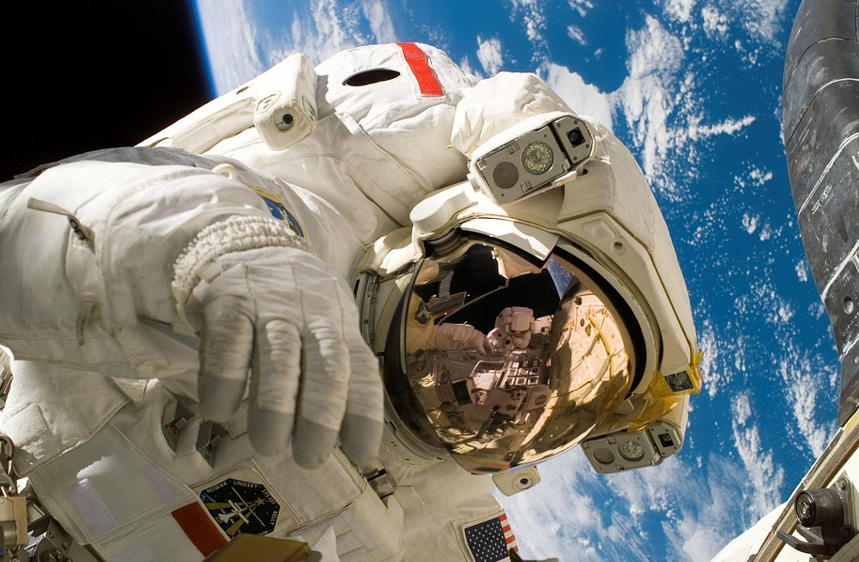
MT: Working at a Space Agency — Key Tips to Follow
MD: Working at a space agency can be…
Read Full Article