

Universe is everything!

 Last Moon Landing
years- :
Months- :
days
hours- :
minutes- :
seconds

What concluded the ‘dark ages’ in the early universe? New Webb data has just gotten us nearer to solving the mystery
About 400,000 years post the Big Bang, the universe was a very dark place. The glow of the cosmos’s explosive birth had cooled, and space was packed with dense gas – mostly hydrogen – with no sources of light. Gradually,
Read Full ArticleHow long will life persevere in our Cosmos?
One of the most mortifying aspects of our Cosmos is the knowledge that all things will eventually pass away. New stars and stellar systems, although are likely to keep forming for many billions or even trillions of years to come,
Read Full ArticleA monster black hole is powering the brightest known object in the universe
Astronomers have discovered a quasar 12 billion light years away hosting a SMBH (supermassive black hole) that gobbles up mass more than the mass of our sun every day A quasar 500 trillion times brighter than our sun has grabbed
Read Full ArticleOur cosmos is merging with ‘baby universes’, causing it to expand, new hypothetical study suggests
The universe is expanding at an ever-accelerating rate, some but not all scientists are in agreement that dark energy is the cause. Maybe, instead, our universe keeps bumping with and absorbing smaller 'baby universes,' a new hypothetical study suggests. Our
Read Full ArticleBridging the universe: How big is the cosmos and is it measurable?
Planck space mission of the European Space Agency has made available detailed maps of the cosmos' oldest light, but even this only nicks the surface of the universe’s full extent. In Short The observable universe is the part we can
Read Full ArticleLarger supercollider demanded by researchers at the world’s biggest particle accelerator to find missing 95% of Universe
Researchers at Switzerland based world's biggest particle accelerator have put forth a proposal for a new, comparatively larger, supercollider. Its aim understandably is to discover new particles that would revolutionize physics and lead to a more thorough understanding of how
Read Full ArticleBlack Holes: The Universe’s Secret Hideouts
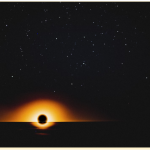
Imagine you're on a space adventure, flying past stars and planets, when you come across the universe's best-kept secret: black holes! These cosmic hideouts are so strong that they can pull in anything close by – even light can't escape!
Read Full ArticleIn a ‘Dark Dimension,’ Physicists look for the Cosmos’s Missing Matter
A notion derived from string theory suggests that dark matter is hiding in a relatively large extra dimension. The theory makes testable assumptions that physicists are examining now. Most of what researchers think exists is consigned to a dark, murky
Read Full ArticleDark Energy Survey bares clues to universe’s complexity
The decade-long effort puts forth findings in consonance with standard cosmological models, but open to more complex interpretations. Way back in 1998, astronomers discovered the fact that the universe is expanding at an ever accelerating rate, owing to a mysterious
Read Full ArticleStar formation history of our universe
If we attempt to quantify star-formation history of our Universe then a fascinating figure crops up. 2.21 sextillion stars have formed in the course of the history of our Universe, at least, within the presently observable part of the universe.
Read Full ArticleWe've recently added
Space Junk: The Growing Problem of Waste in Orbit
How to Work at a Space Agency Like NASA or ESA When You Grow Up
3 Ways to Build Curiosity About Space in Your Kids at Home
New model to explain the current accelerated expansion of the cosmos
There might be a ‘dark mirror’ universe within ours where atoms failed to form, new study proposes
Black Holes: The Universe’s Secret Hideouts
How Mathematics Is Used for Space Exploration?
JWST may have found the oldest black hole in the universe

Space Junk: The Growing Problem of Waste in Orbit

https://www.pexels.com/photo/trash-near-door-1549528/
The vast expanse of space might seem endless, but it quickly becomes cluttered…
Read Full ArticleNew research suggests that ‘Heavy’ dark matter would rip our understanding of the cosmos apart
New research suggests that dark matter can't be too heavy or it might break our best model of the cosmos. We have evidence aplenty that something fishy is occurring in…
Read Full Article