

Universe is everything!

 Last Moon Landing
years- :
Months- :
days
hours- :
minutes- :
seconds

How to Work at a Space Agency Like NASA or ESA When You Grow Up
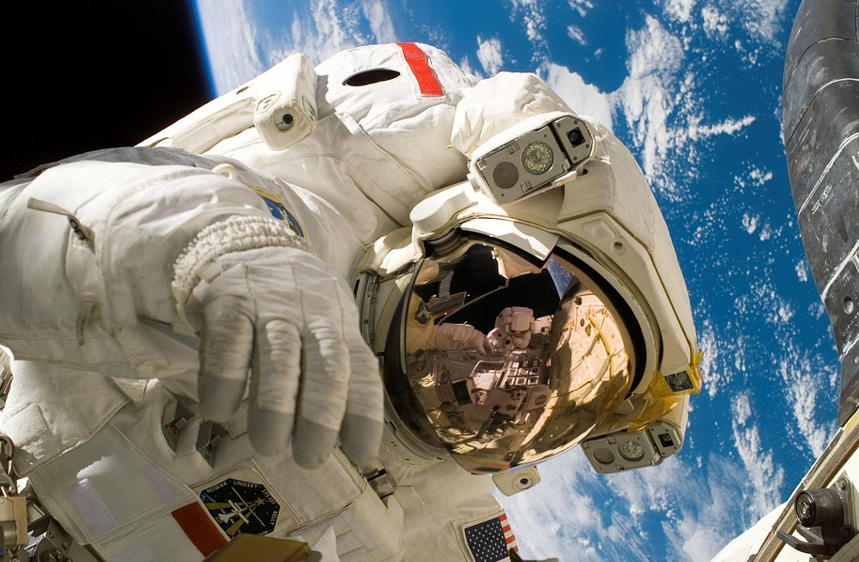
MT: Working at a Space Agency — Key Tips to Follow
MD: Working at a space agency can be a highly rewarding career path. Follow our tips — and you will significantly enhance your chances of being selected and landing a job offer.
How to Work at a Space Agency Like NASA or ESA When You Grow Up
Space is one of the fastest expanding areas in the global economy, employing over 500,000 people across the world. You might join them if you’re motivated and have the necessary skills and certifications. Space careers range from spacecraft construction and satellite design to disaster response coordination and climate change analysis.
You may also help build new technologies, look for indications of life on other planets, or contribute to the emerging subject of space sustainability. Engineers, scientists, accountants, attorneys, communicators, and project managers are among the professionals employed in this business. All you need to do is to prepare your application properly. This is something that we can help you with. So keep reading to find some handy tips and career paths for you to consider.
Skills and Credentials Required
The majority of space professions require creativity, cooperation, and problem-solving skills. Apprenticeships, internships, and technical and higher education (from undergraduate to postgraduate) degrees are essential for providing you with the information, skills, and experience required to further your career in the space sector. What is more, since space is an international endeavor, it often entails collaboration with partners all over the globe. Studying science, engineering, information technology, math, or geography can prepare you for a variety of space occupations. The good news is that there is a variety of career options on the Jooble employment site for qualified professionals
Careers for You to Consider
When we think of space careers, we immediately think of astronauts, scientists, and engineers. However, the space business is fast changing, driven by growing interest in space applications and commercialization. As a consequence, professions in the space sector are spreading outside conventional pathways, providing interesting opportunities for individuals from all backgrounds. There is likely to be a place for you, regardless of your background.
#1 — Engineering
Teams of engineers collaborate to develop and manufacture spaceships, robotics, instruments, and satellite sensors. They learn practical skills and the importance of collaboration in problem solving. As an engineer, you may be working on a new Earth monitoring satellite, a propulsion system, or even voyages to distant planets.
#2 — Data & Software
From coordinating natural disaster response to building computer algorithms for charting urban growth, there are several options to assist offer services from space and improve people’s lives by using data and artificial intelligence. This is one of the fastest growing sectors in the space business, and companies are searching for individuals with a variety of talents to harness space data.
#3 — Space Science
Space scientists and astronomers are answering basic questions about the nature of the cosmos — from identifying planets that might host life to unraveling the secrets of Mercury. Scientists use satellite technology to discover more about the Earth. Biologists employ satellite sensors to study the consequences of plastic pollution, while chemists and physicists use satellite data to anticipate climate change.
#4 — Essential Support Services
The success in space is dependent on a range of vital supporting positions, with the industry in need of project managers, policy, and financing. Attorneys, business development specialists, and communications — each of these occupations has its own set of qualifications, so there’s something for everyone.
#5 — Education
The increased use of space generates ideas and drives innovation. However, none of the ambitious goals could be fulfilled without a trained crew. This emphasizes the need for the next generation of space enthusiasts with diverse subject knowledge. Careers in space education and outreach have never been more prominent. Science communicators, teachers, professors, and anybody working in an educational institution all play an important part in motivating the future generation.
Tips for Applying to Space Agencies
Want to give a try to a career in the space industry? Applying to prestigious space agencies requires careful preparation and understanding of their specific application processes. We have prepared for you a couple of tricks to enhance your chances of success.
- NASA civil service job seekers need to establish a profile through USAJOBS for application submission. The platform enables resume construction before upload so you can successfully apply through this platform.
- Focus on applying for positions that closely match your skills and experiences. Both ESA and NASA receive a high volume of applications, so specificity is key.
- Your motivation letter should be concise yet impactful. Clearly explain why you are interested in the position and how your background aligns with the agency’s mission. Avoid generic statements; instead, provide specific examples of your enthusiasm for space exploration.
- Ensure your resume is well-structured and highlights relevant experiences. For NASA, using the recommended USAJOBS format is encouraged to ensure all critical information is included. For ESA astronaut applications, include necessary documents such as a Europass CV, motivation letter, medical certificate, and passport copy.
Final Say!
Working at a space agency can be a highly rewarding career path. Follow our tips — and you will significantly enhance your chances of being selected and landing a job offer.
Leave a Reply

Space Junk: The Growing Problem of Waste in Orbit
https://www.pexels.com/photo/trash-near-door-1549528/ The vast expanse of space might seem endless, but it quickly becomes cluttered with human-made debris. Every satellite we send up, every rocket we launch, leaves behind…
Read Full Article
How to Work at a Space Agency Like NASA or ESA When You Grow Up
MT: Working at a Space Agency — Key Tips to Follow MD: Working at a space agency can be a highly rewarding career path. Follow our tips —…
Read Full Article
3 Ways to Build Curiosity About Space in Your Kids at Home
3 Ways to Build Curiosity About Space in Your Kids at Home Let’s be honest, the way schools teach fascinating details about space and our…
Read Full ArticleNew model to explain the current accelerated expansion of the cosmos
A new model to explain the present accelerated expansion of the universe has been proposed. Contrasting existing models, this model does not need any form of dark energy or modified…
Read Full Article
Comments